
Explore at your own pace at resource hub
Sometimes it helps to follow a suggestion. Other times, you might want to explore on your own. This space gathers everything available on Tila, podcasts, articles, and activities you can return to whenever you need them.
Healing Isn't Linear
Feelings are like weather, hindi porke’t umuulan today ay hindi na sisikat ang araw,
at hindi porke’t maaraw ay bawal nang umambon.
Emotional progress isn’t a straight line.
You might feel stable for days or weeks and then something small brings everything back. A song. A memory. Their name. It can feel like you’ve undone your progress. But emotional movement after heartbreak is rarely linear. Feeling better and then worse doesn’t mean you’ve failed. It means your system is still adjusting.
Many people are familiar with the five stages of grief described in On Grief and Grieving (Kübler-Ross & Kessler, 2005). While these stages help name emotional experiences, they were never intended as a strict sequence. People may experience anger, sadness, longing, or acceptance in different orders and sometimes all at once. Research also shows that responses to loss vary widely. Some individuals experience intense distress, others show early resilience, and many fluctuate between both (Bonanno, 2009).
Emerging adulthood is a developmental stage characterized by identity exploration (Arnett, 2000). Romantic relationships often play an important role in self-concept. When a relationship ends, the emotional adjustment can feel especially destabilizing. Healing is rarely a straight path. It often moves in layers rather than steps.
Podcast: a pause you can listen to
Hindi kailangang laging may sagot; minsan, sapat na ang may kasama ka.
Tila Podcast is a safe space sa mga araw na kailangan mo ng dahan-dahang pag-unawa. Each episode meets you where you are, offering comfort, reflection, and a quiet pause when you need it most.
Press listen when you’re ready.
Activities: Take a moment for yourself.
These activities are gentle starting points designed to be your space to express what you’re feeling.
Sa Tila, walang tama o maling paraan to engage, piliin mo lang kung ano ang feeling mo ay manageable for you today.It’s a space where you can breathe, reflect, and just let the noise subside at your own pace.
Articles: Understand What You Feel.
Sometimes, mas madaling harapin ang nararamdaman natin kapag naiintindihan natin ang ‘bakit’ sa likod nito. Instead of following fixed stages, these articles are here to give you context kung bakit pabago-bago ang emosyon natin over time.
Feel free to explore these readings para mas maging malinaw ang mga emotional patterns na pinagdadaanan mo during this transition. No pressure to read everything at once, nandito lang ang mga ito para balikan mo whenever you need a bit more clarity

Hindi kailangang sa screen lang ang paghinga. Take a piece of Tila with you.
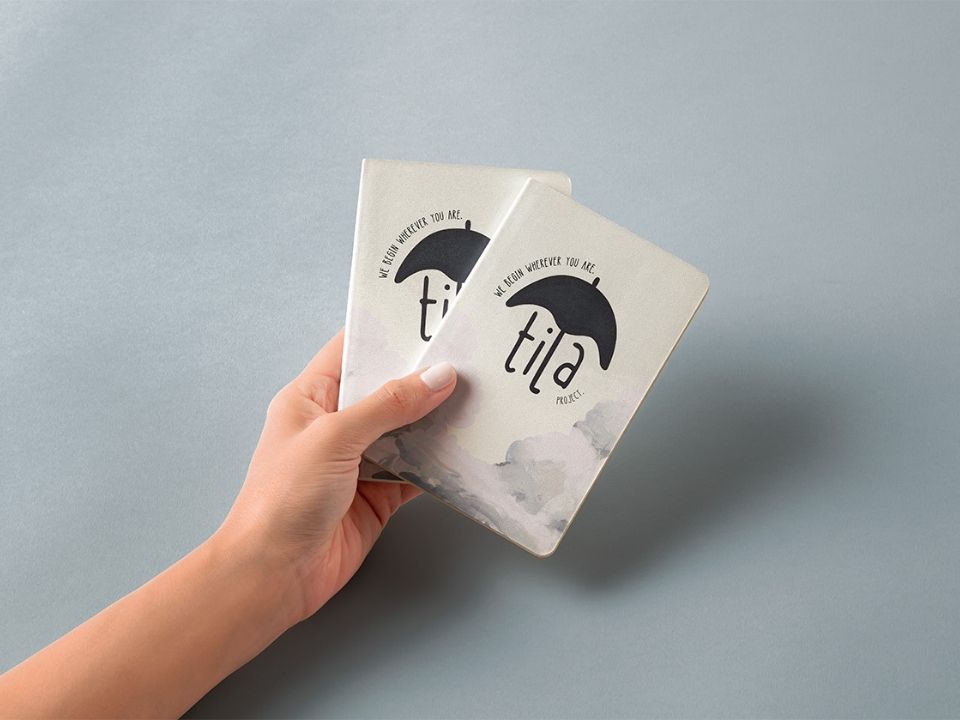
Don’t miss the chance to grab a copy of your own personal Tila pocket journal. A soft space for you and your thoughts under the clouds
Nandito lang kami sa bawat pahina.
References
- Arnett, J. J. (2000). Emerging adulthood: A theory of development from the late teens through the twenties. American Psychologist, 55(5), 469–480. https://doi.org/10.1037/0003-066X.55.5.469
- Bonanno, G. A. (2009). The other side of sadness: What the new science of bereavement tells us about life after loss. Basic Books.
- Chambers, R., Gullone, E., & Allen, N. B. (2009). Mindful emotion regulation: An integrative review. Clinical Psychology Review, 29(6), 560–572. https://doi.org/10.1016/j.cpr.2009.06.005
- Cohen, J. (2001). Defining identification: A theoretical look at the identification of audiences with media characters. Mass Communication & Society, 4(3), 245–264. https://doi.org/10.1207/S15327825MCS0403_01
- Frattaroli, J. (2006). Experimental disclosure and its moderators: A meta-analysis. Psychological Bulletin, 132(6), 823–865. https://doi.org/10.1037/0033-2909.132.6.823
- Gross, J. J. (2015). Emotion regulation: Current status and future prospects. Psychological Inquiry, 26(1), 1–26. https://doi.org/10.1080/1047840X.2014.940781
- Javier, C.. (2026, Feb 23).Written interview responses on multimedia engagement in reflective digital experiences [Unpublished interview].
- Javier, C. (2025, March 2).Interview on multimedia storytelling and emotional engagement in digital platforms [Unpublished interview].
- Juslin, P. N., & Västfjäll, D. (2008). Emotional responses to music: The need to consider underlying mechanisms. Behavioral and Brain Sciences, 31(5), 559–575. https://doi.org/10.1017/S0140525X08005293
- Kabat-Zinn, J. (1994). Wherever you go, there you are: Mindfulness meditation in everyday life. Hyperion.
- Keng, S. L., Smoski, M. J., & Robins, C. J. (2011). Effects of mindfulness on psychological health: A review of empirical studies. Clinical Psychology Review, 31(6), 1041–1056. https://doi.org/10.1016/j.cpr.2011.04.006
- Kübler-Ross, E., & Kessler, D. (2005). On grief and grieving: Finding the meaning of grief through the five stages of loss. Scribner.
- Laurena, M. (2025, March 14).Interview on emotional processing through creative practices after romantic breakup [Unpublished interview].
- Laurena, M. (2026, February 9).Written interview responses on therapeutic arts and emotional processing after romantic breakups [Unpublished interview].
- Lewandowski, G. W., Jr., & Bizzoco, N. (2007). Addition through subtraction: Growth following the dissolution of a low-quality relationship. The Journal of Positive Psychology, 2(1), 40–54. https://doi.org/10.1080/17439760601069234
- Lieberman, M. D., Eisenberger, N. I., Crockett, M. J., Tom, S. M., Pfeifer, J. H., & Way, B. M. (2007). Putting feelings into words: Affect labeling disrupts amygdala activity in response to emotional stimuli. Psychological Science, 18(5), 421–428. https://doi.org/10.1111/j.1467-9280.2007.01916.x
- Marshall, T. C., Bejanyan, K., & Ferenczi, N. (2013). Attachment styles and personal growth following romantic breakups: The mediating roles of distress, rumination, and tendency to rebound. PLoS ONE, 8(9), e75161. https://doi.org/10.1371/journal.pone.0075161
- Marshall, T. C., Bejanyan, K., & Ferenczi, N. (2013). Attachment styles and personal growth following romantic breakups: The mediating roles of distress, rumination, and tendency to rebound. PLOS ONE, 8(9), e75161. https://doi.org/10.1371/journal.pone.0075161
- Neimeyer, R. A. (2001). Meaning reconstruction & the experience of loss. American Psychological Association.
- Park, C. L. (2010). Making sense of the meaning literature: An integrative review of meaning making and its effects on adjustment to stressful life events. Psychological Bulletin, 136(2), 257–301. https://doi.org/10.1037/a0018301
- Pennebaker, J. W., & Chung, C. K. (2011). Expressive writing: Connections to physical and mental health. In H. S. Friedman (Ed.), The Oxford Handbook of Health Psychology (pp. 417–437). Oxford University Press.
- Pennebaker, J. W. (1997). Writing about emotional experiences as a therapeutic process. Psychological Science, 8(3), 162–166. https://doi.org/10.1111/j.1467-9280.1997.tb00403.x
- Serrano, A. (2025, March 7).Interview on relationship dynamics and emotional recovery after romantic breakup [Unpublished interview].
- Sloan, D. M., & Marx, B. P. (2004). A closer examination of the structured written disclosure procedure. Journal of Consulting and Clinical Psychology, 72(2), 165–175. https://doi.org/10.1037/0022-006X.72.2.165
- Tukachinsky, R., & Stever, G. S. (2019). The psychology of parasocial relationships: A meta-analysis. Communication Research Reports, 36(4), 275–285. https://doi.org/10.1080/08824096.2019.1643531